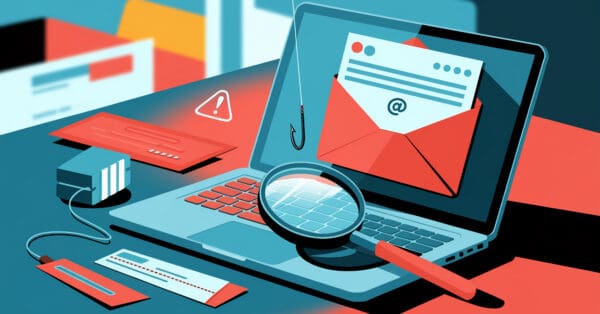
Phishing remains one of the most dangerous, effective and prevalent cyberattack methods today. According to the 2026 Kaseya Cybersecurity Outlook Report, more than half (56%) of businesses have been impacted by phishing-related incidents at least once, and nearly half (49%) were targeted in the past year alone. By enticing users to click on malicious links, surrender credentials or unknowingly open pathways into the network, phishing attackers can cause serious and costly damage to businesses of all sizes.
While many phishing attacks are designed to steal data, cybercriminals are increasingly changing or destroying it. Ransomware attacks — often initiated through phishing emails — encrypt critical data and hold it hostage until a ransom is paid for the decryption key. Once inside a network, attackers can also damage core systems and controls, creating long-lasting operational and financial impacts.
In this article, we take a closer look at how phishing has evolved in recent years and examine the true cost of phishing attacks on organizations.
How phishing has evolved since the last decade
Phishing attacks have become more sophisticated, refined and convincing in the last few years. What used to be clumsy “Dear Sir, you won a prize” emails or Nigerian princes or government officials promising a large sum of money in exchange for a small advance fee has evolved into something much more devious and harder to spot.
A decade ago, phishing largely meant mass spam emails. The same message is sent to millions of people. These emails were riddled with spelling mistakes and obvious red flags. Today, phishing attacks are highly targeted, with messages tailored to specific individuals or roles, such as finance, HR or IT.
Modern attackers conduct thorough research before striking. They use publicly available information, company websites and social platforms to make their communications appear legitimate. Brand impersonation is another highly convincing phishing method where cybercriminals mimic the brands you trust with great accuracy. They use fake logos, emails, invoices, websites and deceptive language to steal critical information or install malicious software.
Phishing attacks have evolved beyond email. They’re now spread across smishing (SMS), vishing (phone calls), quick response (QR) codes, collaboration tools like Teams and Slack, and social media direct messages (DMs).
Subscription-based cybercrime models, such as Phishing-as-a-Service (PhaaS), provide ready-made hacking tools, enabling even those with limited technical skills to execute sophisticated attacks.
In recent years, attackers have leveraged automation and AI to scale personalization and craft highly convincing and professional phishing emails. The 2025 Data Breach Investigations Report found that the use of AI-generated text in malicious emails has doubled over the past two years. These emails don’t contain traditional warning signs, such as poor grammar or spelling errors. They look completely legitimate, making them extremely difficult to identify.
Phishing by the numbers: The current threat landscape
Email is the most exploited attack vector in cybersecurity. In fact, over 75% of cyberattacks begin with a phishing email.
As discussed at the beginning of the article, 49% of businesses were impacted by phishing-related incidents in 2025. The majority of respondents in the 2026 Kaseya survey expect the onslaught of attacks to continue. Nearly 70% of businesses surveyed believe they will fall victim to a successful phishing attack in the next 12 months.
Every day, an estimated 3.4 billion phishing emails are sent globally. If even 1% of these phishing attacks are successful, that would amount to 34 million. Even a low click-through rate becomes dangerous at scale. When tens of thousands of phishing emails reach your organization’s inboxes daily, it only takes one successful interaction to cause major damage.
The Cost of a Data Breach Report 2025 found that the global average cost of a data breach fell by 9% to $4.44 million, compared to $4.88 million in 2024. This decline was attributed to businesses identifying and containing breaches faster. The report also found that phishing was the most common attack method, accounting for 16% of incidents and costing an average of $4.8 million.
What a phishing attack really costs a business
The true cost of phishing extends far beyond a single compromised account or the initial financial loss. Depending on the severity of the attack, the impact on your business can be significant and long-lasting.
Direct financial losses
When it comes to phishing, no organization is immune. Successful phishing attacks can cause heavy financial losses ranging from tens of thousands to millions of dollars per incident.
Incident response and recovery costs
After a cyber incident, your organization must investigate the breach, involve forensic experts, restore critical systems and data, and take necessary actions to strengthen security. These activities require time, effort and money. Apart from this, your company should also take into account legal fees, regulatory reporting and potential fines.
Operational disruption
Phishing attacks can disrupt day-to-day operations, cause downtime and delay critical business processes. Remediation processes, such as incident response, system recovery and forensic investigations, can take weeks or even months.
Employee productivity loss
When a cyber incident occurs, IT and security teams must divert time and resources to contain the attack rather than use them on strategic projects. Your employees may also face system lockouts, password resets and workflow interruptions, which can impact productivity.
Reputational damage
A phishing attack or a data breach incident can severely damage your company’s reputation. Your clients may reconsider doing business with your organization, and brand credibility can suffer long-term harm.
Increased insurance premiums
A successful breach can lead to higher cyber insurance costs and increased compliance scrutiny, especially in industries with strict compliance requirements.
Why traditional email security falls short
Modern attackers are changing how they execute their campaigns. Instead of depending mainly on malware, today’s phishing campaigns impersonate trusted brands, mimic everyday business processes and exploit human judgment to bypass technical defenses.
At the same time, they’re increasingly using AI-generated or AI-assisted content. Automation and Gen AI allow them to quickly create convincing branding, natural-sounding language and highly personalized messages at scale. These emails are crafted to look like routine business communications, making them harder for both employees and traditional security systems to detect.
Traditional email security solutions were designed to block known threats, such as spam, viruses and malicious attachments. However, modern phishing campaigns are constantly evolving. Threat actors generate new domains, write highly convincing email content and rotate infrastructure quickly, making it difficult for legacy controls to keep up.
Additionally, if attackers gain access to a legitimate email account within your organization, email security solutions may treat messages from that account as coming from a trusted internal sender. Traditional filters can struggle to detect these “trusted” emails, even if they contain malicious links or fraudulent requests.
What modern phishing defense must do today
As phishing attacks become more advanced and harder to detect, your organization needs robust protection that goes beyond traditional email filtering. Modern phishing defense must be intelligent, adaptive and user-aware.
Your phishing protection solution should:
Detect unknown and zero-day attacks
Threat actors constantly change their tactics and seek vulnerabilities to exploit. Effective phishing defense solutions should be able to identify previously unseen threats using behavioral analysis, machine learning and anomaly detection.
Analyze visual elements, branding and context — not just text
Today’s phishing emails include realistic logos, formatting and brand impersonation, making them harder to spot. Advanced phishing defenses should inspect visual cues, spoofed branding and contextual factors (such as unusual requests or communication patterns) to identify malicious emails.
Provide clear, in-line warnings that help users make safer decisions
When a suspicious message reaches the inbox, users need real-time guidance to make the right decision. Modern anti-phishing solutions should provide contextual, in-line alerts that explain why a message is suspicious. This capability helps employees pause, verify requests and make safer decisions.
How advanced, AI-driven phishing protection changes the equation
Your organization must take a proactive approach to defend against today’s devious phishing threats. That starts with rethinking traditional email security and adopting a more advanced solution.
You need AI-powered email security that detects phishing attempts before they reach your end users. It should automatically disable malicious links, quarantine harmful emails and provide clear, highly visible warnings that educate users and help them recognize future threats.
Kaseya’s GenAI-powered email security solution uses artificial intelligence, machine learning and computer vision to stop sophisticated phishing attacks that other tools miss.
Most anti-phishing solutions rely heavily on blacklists of known threat actors. Cybercriminals understand this, and continuously rotate domains, URLs, IP addresses and email identities to evade detection. Instead of relying solely on threat lists, our AI-driven solution analyzes the email itself. It identifies inconsistencies in company names and can even detect subtle logo alterations down to the pixel level. This enables it to catch highly realistic forgeries that appear legitimate and often bypass traditional filters.
When suspicious activity is detected, the system neutralizes the threat and inserts a bold, in-line warning directly within the email body. These banners not only protect users but also reinforce security awareness in real time.
Built-in protections within Exchange, Microsoft 365 and Google Workspace provide a baseline level of security, but they are not enough against modern phishing techniques. These systems primarily rely on blacklists and keyword-based content filtering, which can miss advanced, AI-generated attacks.
Our solution goes further by analyzing and tracing links before they are delivered. It evaluates the destination in real time and quarantines suspicious links until they are verified as safe.
Stop email threats before they cause damage. Discover how Kaseya’s GenAI-powered email security solution neutralizes malicious messages before they can compromise accounts or disrupt your organization. Learn more.